
Introduction
Search Engine Optimization (SEO) marketing is the cornerstone of organic digital visibility. Its primary goal is to enhance a website's discoverability on search engines, drive relevant traffic, and build long-term brand authority. Unlike paid campaigns that provide immediate visibility, SEO delivers sustainable results by aligning content, technical infrastructure, and user experience with search engine algorithms.
For beginners, the journey into SEO marketing can seem complex, but it follows a structured path. Learning SEO involves understanding search engine mechanics, mastering content strategies, and implementing technical optimizations. Importantly, effective SEO does not necessarily require paid tools; a combination of free resources, structured learning, and consistent practice can yield substantial results.
Core Takeaways:
- SEO marketing focuses on organic growth, long-term visibility, and audience engagement.
- Understanding search engine indexing is critical for any SEO campaign.
- Beginners can achieve meaningful results without expensive tools by mastering fundamentals.
- The SEO process integrates technical optimization, content creation, and structured data management.
What Is SEO Marketing?
SEO Marketing Definition and Core Purpose
SEO marketing involves optimizing a website so that it ranks higher in organic search results, thereby increasing visibility, traffic, and conversions. Its core purposes include:
- Enhancing website discoverability by search engines
- Driving targeted organic traffic that converts
- Building domain authority and credibility over time
- Reducing dependence on paid marketing channels
For authoritative guidance, Google’s SEO Starter Guide provides a foundational overview of SEO principles, crawlability, and indexing best practices.
SEO vs Paid Ads and Social Media Marketing
| Channel | Visibility Onset | Cost Structure | Sustainability | Core Strengths |
|---|---|---|---|---|
| SEO (Organic) | Weeks to months | Primarily time/effort | Long-term | Credibility, sustainable traffic |
| Paid Ads (Google Ads, Meta) | Immediate | Budget-dependent | Short-term | Quick traffic, precise targeting |
| Social Media Marketing | Variable | Budget + content cost | Medium-term | Engagement, brand awareness |
SEO differs from paid ads and social media marketing by focusing on organic, sustainable visibility rather than immediate but temporary exposure.
Why Google SEO Indexing Matters
Indexing is the foundation of SEO. A webpage that is not indexed by Google will not appear in search results, rendering any optimization efforts ineffective. Understanding indexing involves recognizing how Google discovers, crawls, and interprets website content. For a technical perspective, see How Search Engines Index Content – Search.gov.
Understanding Google SEO Indexing
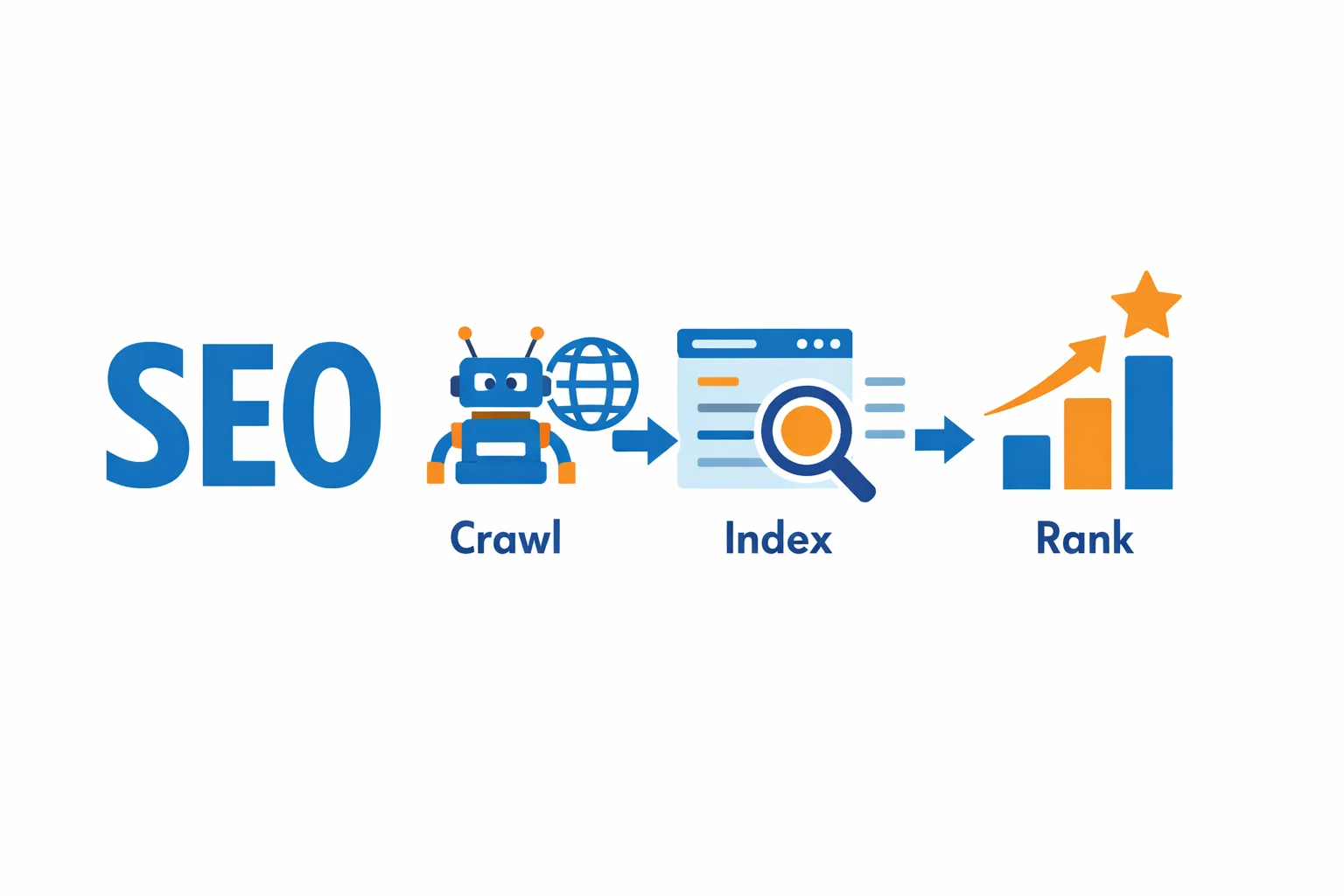
The SEO Lifecycle: Crawling → Rendering → Indexing → Ranking
Google SEO follows a structured lifecycle:
- Crawling: Search bots discover pages via sitemaps, internal links, or external referrals.
- Rendering: Google interprets the page content, including JavaScript-generated elements.
- Indexing: Processed pages are added to Google’s index for retrieval in relevant queries.
- Ranking: Indexed pages are ranked based on relevance, authority, and user experience.
Visualizing this lifecycle helps beginners understand why some pages may not appear in search results. For detailed technical guidance, refer to Google Crawling and Indexing Documentation.
Common Indexing Challenges
Indexing can be hindered by multiple factors:
- Technical barriers:
robots.txt,noindexdirectives, broken links - Content quality: Thin content, duplicate pages, poor relevance
- Redirections: Excessive 301/302 chains
- 404 errors: Unavailable pages
Addressing these issues systematically ensures all valuable content is indexed. Resources like Technical SEO Techniques – Google Search Central provide authoritative insights into resolving these obstacles.
For those looking to fully understand Google’s crawling, indexing, and ranking chain, ShortKey offers a free tutorial that walks beginners through practical steps, from site structure to indexing optimization.
SEO Marketing Strategy and Implementation
Core Strategy Components
Effective SEO strategy rests on three pillars:
- Technical Optimization: Fast-loading, crawlable, and secure websites.
- Content Optimization: Targeted keywords, high-quality copy, and user-centered structure.
- Structured Data: Using schema markup to enhance visibility in rich results.
For structured data standards, Schema.org Structured Data Initiative offers an authoritative reference.
Beginner-Friendly SEO Framework
A structured framework for beginners includes:
| Stage | Key Actions |
|---|---|
| Website Structure | Clear hierarchy, XML sitemap, internal linking |
| Keyword Strategy | Target high-intent, low-competition terms |
| Content Planning | Informative, authoritative, and structured content |
| Technical Checks | Mobile responsiveness, HTTPS, page speed |
| Structured Data | Implement JSON-LD for rich snippets |
This framework balances practical execution with long-term SEO growth, allowing learners to achieve visible results without complex tools.
Typical SEO Mistakes to Avoid
- Focusing solely on content without ensuring indexing
- Over-reliance on SEO tools while ignoring fundamentals
- Neglecting technical issues like broken links, slow pages, or duplicate content
Following guidelines such as Advanced SEO Best Practices – Digital.gov ensures a technically sound foundation.
Cost and Feasibility: Can SEO Be Free?
What Can Be Achieved Without Paid Tools
Free SEO approaches are surprisingly effective for beginners:
- Optimizing meta tags, headings, and internal links
- Creating quality, structured content
- Conducting basic keyword research with tools like Google Keyword Planner
- Monitoring indexing through Google Search Console
Limitations of Free SEO Approaches
Free approaches face limitations:
- Inability to analyze large-scale competitive data
- Limited automation for technical audits
- Challenges in monitoring keyword rankings at scale
Paid tools like SEMrush or Ahrefs provide efficiency, but understanding SEO fundamentals remains more valuable than the tools themselves.
Understanding SEO Fundamentals Over Tools
A foundational knowledge of SEO enables independent problem-solving:
- Understanding crawl budgets, indexing rules, and ranking signals
- Structuring websites and content to maximize search engine understanding
- Implementing structured data and accessibility practices
Resources such as SEO Best Practices – U.S. Department of Energy reinforce evidence-based, tool-independent strategies.
Learning SEO Marketing the Right Way
Stage-Based Learning Needs
Different users require tailored learning paths:
| Stage | Learning Focus |
|---|---|
| Beginner | SEO basics, indexing, keyword selection, content creation |
| Content Operator | Advanced content strategy, user intent mapping, link building |
| Technical Webmaster | Site architecture, structured data, crawl optimization |
Structured, stage-based learning accelerates adoption and reduces frustration.
Practical Resources for SEO Learning
Effective learning combines documentation, tutorials, and practice:
- Google Search Central Documentation – authoritative guides
- Free courses from platforms like Coursera, Moz Academy, or SEMrush
- Hands-on exercises: keyword research, content audits, technical checks
Additionally, for a practical walkthrough of Google’s crawling, indexing, and ranking process, beginners can leverage ShortKey’s free tutorial, which explains the complete SEO workflow and actionable optimization steps.
Key Takeaways for Continuous Learning
- Monitor indexing and rankings regularly
- Adapt strategies to algorithm updates
- Balance content creation with technical improvements
- Leverage authoritative documentation for guidance
Consistent practice ensures long-term SEO growth.
Frequently Asked Questions
Q1: Is SEO worth investing time in?
A: Yes, it builds sustainable organic traffic and brand authority, unlike paid ads which stop delivering once budgets end.
Q2: How long does SEO take to show results?
A: Typically 3–6 months, depending on competition, content quality, and technical optimization.
Q3: Can I do SEO without coding skills?
A: Many aspects (content, keyword strategy, internal linking) are accessible to non-technical users, though technical SEO benefits from developer involvement.
Q4: What is the role of indexing in SEO?
A: Without indexing, your pages cannot appear in search results. Regular monitoring ensures content is discoverable and ranked properly.
Conclusion
SEO marketing is a multi-layered practice that combines technical expertise, content strategy, and structured learning. By understanding concepts, indexing workflows, strategy implementation, and available resources, marketers and site owners can achieve sustainable organic growth.
Core Takeaways:
- SEO drives long-term organic visibility and traffic.
- Technical optimization, content strategy, and structured data are essential pillars.
- Beginners can achieve meaningful results using free tools and documentation.
- Continuous monitoring, learning, and adaptation are key for long-term SEO success.
For further guidance, consult Google’s SEO Starter Guide and Structured Data Documentation to ensure compliance with best practices and maximize indexing efficiency.