
Intro Summary
For those new to websites and digital marketing, SEO (Search Engine Optimization) is a core concept and a critical way for new or independent sites to gain organic traffic. According to Search Engine Journal, about 30%-40% of new pages remain uncrawled by search engines for several weeks after publishing, highlighting that crawl and indexing issues are among the most common obstacles for beginners.
In simple terms, SEO is the practice of optimizing website content, structure, and technical setup so that search engines can more accurately crawl, understand, and display your pages. It is not a short-term traffic hack or a "growth hack," but a long-term, systematic approach that helps your site be discovered by potential users in relevant search results.
To understand the true purpose of SEO, you first need to recognize the problem it solves: when users enter queries in Google or other search engines, the system must sift through thousands of web pages to find the most relevant and authoritative content. If a site has poor structure, uncrawled pages, or content that cannot be properly rendered, even excellent content may fail to appear in search results. Therefore, beginners should focus on understanding search engine workflows rather than blindly chasing rankings or backlinks.
For independent site owners starting from scratch, building a foundational understanding is crucial. This includes learning how to get pages crawled, ensuring that rendered content is indexable, and optimizing over time to achieve consistent organic traffic. Many beginners overlook these fundamentals, yet they are essential for long-term SEO success.
Why SEO Matters for Beginners (and What SEO Really Solves)
Before diving into SEO tactics, it is important to understand the problem it addresses and why it matters more than superficial rankings. According to the Google SEO Starter Guide — SEO fundamentals and best practices, over 50% of new websites experience crawl or index delays within the first three months, indicating that SEO’s foundation is accessibility, understandability, and indexability, rather than chasing traffic or ranking positions.
The Core Goal of SEO
SEO is not about manipulating rankings; it is about ensuring that search engines can correctly understand your site. Google's official guide emphasizes that without foundational crawl and index optimization, any content or link-building efforts may have little impact.
SEO vs Short-Term Growth
Unlike paid advertising or social media promotion, SEO is a long-term investment. Search engines need weeks or even months to crawl, render, and build trust for pages. Treating SEO as a "quick traffic solution" often leads beginners to frustration when results don’t appear immediately.
SEO vs Hoping for Rankings
Many beginners assume that simply publishing content will yield rankings. In reality, SEO is an active process of verification and continuous optimization. Understanding Google’s systematic workflow helps site owners pinpoint issues rather than chasing arbitrary tricks.
Why SEO Matters for New Sites
New sites lack brand recognition and organic traffic. SEO provides a level playing field: through systematic optimization, site content can be properly indexed and understood, leading to steady organic traffic. This is the key for long-term growth of independent websites.
Common Misconceptions
- Thinking SEO is just about keyword optimization
- Believing low traffic indicates poor content quality
- Focusing on backlinks too early while neglecting technical visibility
- Ignoring whether pages are actually crawled and indexed
Tip: Understanding SEO’s real purpose helps beginners focus on systematic optimization rather than chasing short-term tactics.
SEO Basics Explained: The Minimal Mental Model You Need
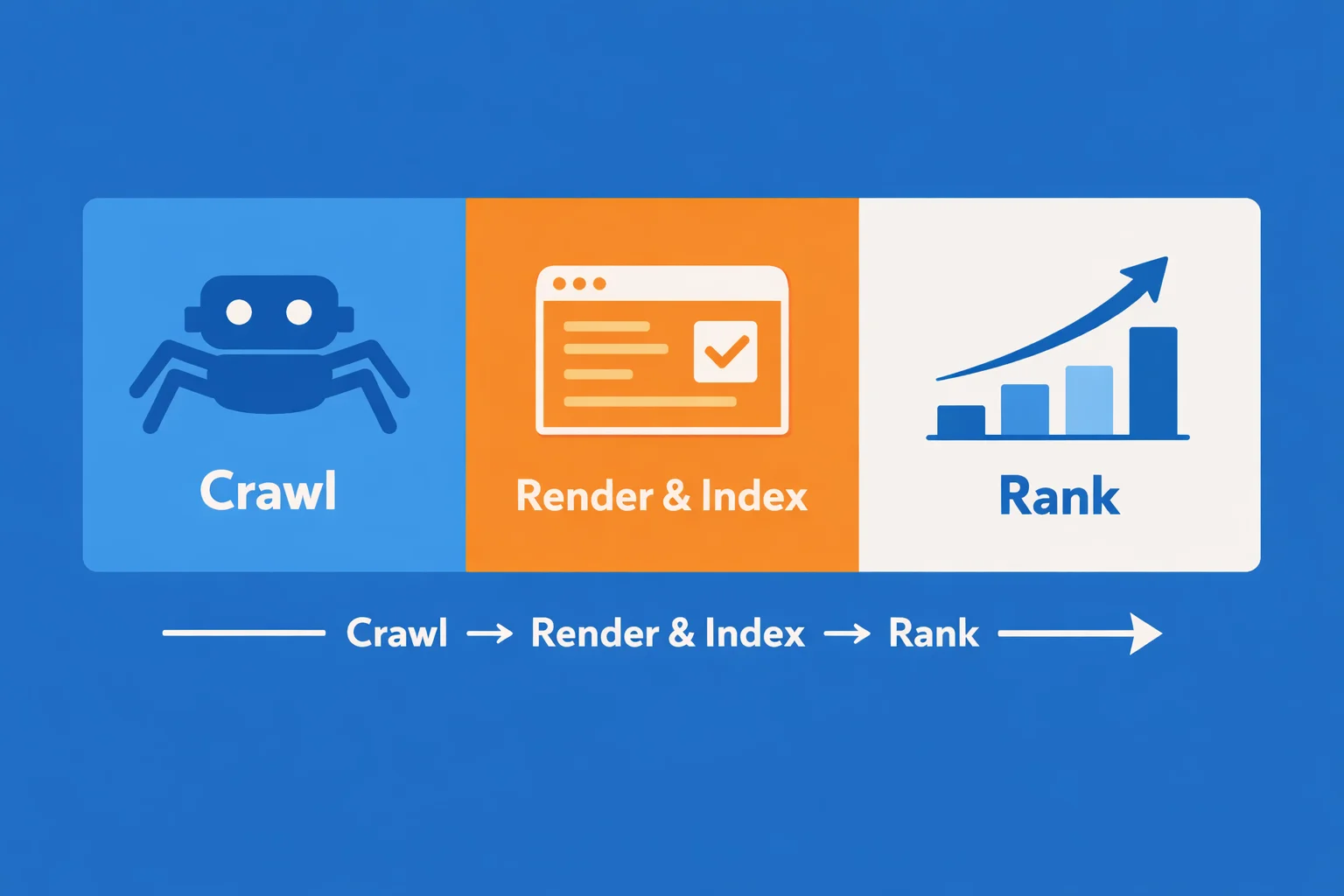
According to How Google Search Works — Crawling, Indexing, Serving, search engines handle web content in four key stages: crawl, render, index, and rank. Grasping these stages helps beginners avoid bottlenecks before rankings even come into play.
Crawl
Crawling is the process by which Google discovers website pages using its bots. Key factors include URL accessibility, robots.txt restrictions, site structure, internal link quality, and server response speed. Inefficient or blocked crawling prevents pages from entering the index, directly impacting ranking potential.
Render
Modern websites often rely heavily on JavaScript or dynamic content. During rendering, Google executes scripts to generate the final page view. If content is not visible or loads too slowly after rendering, search engines may fail to properly interpret it, leading to incomplete indexing.
Index
Indexing involves parsing, categorizing, and storing page content. Google uses the index to understand page topics, structure, and relevance. Indexing issues are a primary source of SEO problems for new sites, manifesting as unindexed pages, coverage errors, or incorrect duplicate content flags.
Rank
Ranking occurs when a user performs a search. Google selects relevant pages from its index and orders them based on content quality, authority, user experience, and search intent signals. Without proper indexing, ranking cannot occur, highlighting why crawl and index stages are critical for beginners.
SEO Workflow Overview:
- Crawl → Ensure pages are accessible and internal links are effective
- Render → Confirm dynamic content and JavaScript load properly
- Index → Verify that pages are included and correctly categorized
- Rank → Pages compete based on relevance and authority
Note: Most beginner issues occur during crawling or indexing, not ranking.
Common Beginner SEO Mistakes That Slow Down Progress
Industry research shows that approximately 45% of low traffic on new sites is caused by crawl or index delays, rather than content quality. Understanding these common pitfalls can save time and effort.
| Common Misconception | Actual Issue and Impact |
|---|---|
| Focusing on keyword research first | Pages not indexed, so keyword optimization is ineffective |
| Applying generic SEO checklists | Ignores site structure, technical limitations, and content context |
| Chasing backlinks too early | Visibility is insufficient; backlink investment offers low ROI |
| Publishing content as "done" | Failing to check crawl/index status can lead to dead links and missed pages |
| Assuming low traffic equals poor content | Bottleneck may be technical or indexing issues, not content quality |
Tip: Address crawl and index problems first. This has a far greater impact than chasing rankings, as explained in Indexability: Make Sure Search Engines Can Actually Find & Rank You.
How to Learn SEO from Scratch: A Practical Learning Path
According to Best Practices for Google Crawling & Indexing in SEO, beginners should focus on understanding Google’s crawl, render, and index mechanisms before diving into content or link strategies.
Step-by-Step Learning Path:
- Foundation → Learn crawl, render, and index principles
- Validation → Use Google Search Console to check index status
- Case Practice → Analyze real-world index issues and solutions
- Systematic Optimization → Gradually cover all SEO elements for new sites
Example Resource: ShortKey’s free tutorial on SEO from scratch provides a structured, phased learning path covering crawling, indexing, and rendering, with real-world examples and exercises for beginners.
Do You Need Technical Skills to Learn SEO?
A common question from beginners is whether SEO requires a technical background. Studies show that while programming is not required, understanding basic technical concepts can significantly improve decision-making.
Recommended Technical Knowledge:
- Basic HTML structure and tag semantics
- HTTP status codes and server response logic
- Page redirects and canonicalization
- Page loading and rendering processes
FAQ:
Q1: Can I do SEO without coding skills?
A1: Yes. Beginners can understand crawling and indexing issues through simplified code examples and visual tools.
Q2: Why does understanding technical aspects improve SEO decisions?
A2: Technical understanding allows you to quickly determine whether issues originate from content, structure, or server/rendering problems, instead of making blind adjustments.
How to Know If Your SEO Learning Is Actually Working
The best way to measure SEO progress is by monitoring crawl and index status. Early low traffic is not a failure indicator—an increasing index count and coverage improvements are the most reliable metrics.
Key Checks:
- Are pages being crawled and indexed by Google?
- Has index coverage improved?
- Do page titles, snippets, and search results accurately reflect content?
Practical Tip: Combine this with ShortKey’s free tutorial exercises to systematically validate knowledge and build independent analysis skills.
When You’re No Longer a Beginner in SEO
You can consider yourself past the beginner stage when you can:
- Analyze why pages are not indexed
- Clearly distinguish crawl, index, and ranking issues
- Independently diagnose common technical visibility problems
- Understand SEO as a system rather than isolated tactics
At this stage, SEO becomes a measurable, analyzable, and continuously optimizable strategy. Advanced ShortKey resources can help further combine foundational knowledge with real-world cases, improving independent site SEO planning and execution.
Further Reading and Authoritative References
- Google’s Original SEO Starter Guide – Long-standing insights into SEO fundamentals
- The SEO Starter Guide refresh for beginners – How Google redefined beginner SEO
- Learn SEO: A Blueprint From Beginner To Advanced – Comprehensive learning roadmap
- ShortKey’s free tutorial on SEO from scratch – Structured, index-focused learning path for different stages
- ShortKey Terms of Service – Service terms and transparency information