
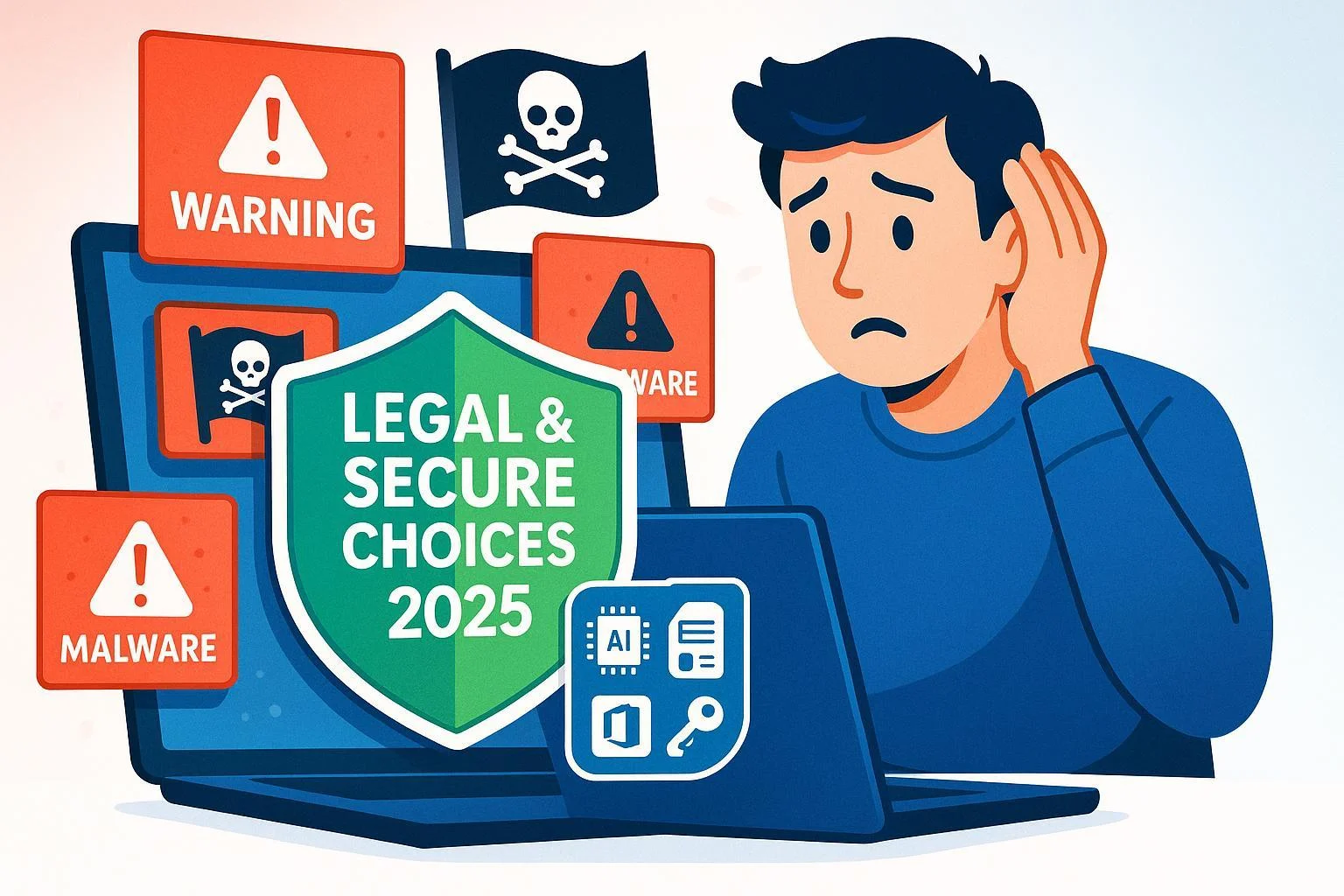
Imagine this: You’re a student on deadline or a freelancer prepping a big proposal. The software you need costs more than your whole monthly budget, so you Google for a cracked version or join a Telegram “discount key” channel. Within minutes, your PC starts acting up; popups multiply, your documents vanish, and you receive an ominous ransom note. Instead of saving money, you’ve opened the door to malware and possibly legal headaches—a story still unfolding for thousands in 2025.
Many of us have hovered over that tempting “Download Now” button for cracked AI and office software. The appeal is obvious: free access, full features, no barriers. But what’s changed in 2025 is the escalating risk—not just malware and ransomware, but advanced anti-piracy crackdowns, data breaches, and the reality that safer, smarter alternatives are just a click away.
The Hidden Costs and Dangers of Cracked Software in 2025
1. Malware, Ransomware, and the Real-World Fallout
Cracked and pirated software remains one of the leading sources of cyberattacks—now with even nastier malware, privacy breaches, and ransomware threats. In late 2024, malware hidden in cracked AI and office apps accounted for over half of all individual cyberattacks according to the 2025 ThreatScape report by Positive Technologies. Ransomware, often triggered by fake “patches” or pirated installers, made up 42% of all detected malware infections.
Pop-up warnings and lost files are just the beginning. Victims have faced data theft, cryptomining, and extortion demands—sometimes losing entire projects or personal photos.
2. Legal Trouble Is More Likely Than You Think
It’s tempting to dismiss piracy as a harmless workaround. But global enforcement has stepped up with real-time AI monitoring and automated takedowns. Software piracy cost the industry $46 billion in 2025 (ScoreDetect global piracy insights), and new cases show that even individuals and freelancers can be caught in the net. Though prosecution rates remain low—~0.05% in the U.S.—the consequences are real if you’re flagged: fines, loss of business accounts, or even criminal liability, especially in professional settings.
3. Instability, Lost Data, and No Support
Ever tried a cracked app only to get random crashes, missing features, or failed updates? Users of pirated software frequently discover that new functions, cloud backups, or collaborative tools simply don’t work. Worse, there’s no official support or security patches; most are locked out of help just when they need it most. According to Kaspersky’s analysis, the cost of recovering from a single malware incident often outweighs the savings from using pirated apps.
4. Ethical and Professional Consequences
There’s also the moral dilemma: using hacked software means participating in intellectual property theft, undermining the work of developers, and risking your own reputation if discovered. Teams and organizations especially risk compliance audits—and it’s far simpler to choose legal alternatives than clean up after a costly incident.
So What’s Out There? Your Actionable List of Legal, Flexible Alternatives (2025)
The best news for budget-minded users is that real, affordable options DO exist—thanks to advances in SaaS, subscription flexibility, open source, and curated marketplaces like ShortKey.ai. Let’s break down what works best for different needs and budgets:
A. Open Source Office/AI Software
- LibreOffice / OnlyOffice: Top choices for full offline productivity, compatible with MS Office formats. Free, robust, and cross-platform.
- Google Docs/Sheets/Slides: Cloud-based collaboration for individuals and teams; ideal for students and remote workers. Free with a Google account.
- Hugging Face / Stable Diffusion/OpenAI (free tier): For experimentation with AI models. Many offer academic licenses, generous limits.
B. Free Trials and Educational Discounts
- Microsoft 365 / Google Workspace: Official vendors routinely offer 7–30 day trials—no piracy, all features, reliable support.
- WPS Office / Zoho Workplace: Cloud-native productivity suites with mobile apps and student/small business discounts.
- Academic/Educator Licenses: Students and faculty can claim robust suites at minimal/no cost. See TechHero’s guide to Office options 2025.
C. Flexible Subscriptions, Managed Marketplaces, and Pay-As-You-Go
- ShortKey.ai: Official daily, weekly, monthly keys for top AI and office tools—no shared logins, no risky hacks. Try software for the project you need, then pause, upgrade, or swap; curated security and vetted sources (perfect for freelancers, students, and teams).
- CloudEagle.ai, Zylo, Zluri: License management for SMBs/enterprises; manage, optimize, and compliantly scale software use without lock-in.
Side-by-Side Comparison: Cracked vs. Legal Alternatives in 2025
| Features | Cracked/Pirated | Open Source | Full License | Short-Term/SaaS Subscriptions |
|---|---|---|---|---|
| Cost | Free (plus risk) | Free | $$, one-off | $/day, $/week, $/month |
| Security | High-moderate risk (malware etc.) | Safe | Safe | Safe |
| Legality | Illegal | 100% legal | 100% legal | 100% legal |
| Reliability | Unstable, no updates | Stable | Stable, full support | Stable, access to updates |
| Support | None | Community only | Full vendor | Full vendor (during active sub) |
| Flexibility | None (all or nothing) | Moderate (limits) | Low (fixed cost) | Maximum (choose period/tools) |
| Upgrade Access | None | Moderate | Full (sometimes extra) | Full during sub |
| Data Privacy | High risk | Safe | Safe | Safe |
"Free" quickly turns expensive if your files are lost, your device is infected, or your account is flagged—a key point repeated by cyber risk experts in both the Twincities PC Repair report and the Global PT ThreatScape summary.
How to Move from Cracked Software to Safe, Legal Use (Step-by-Step)
1. Uninstall All Pirated Software: Use the official OS uninstaller (Windows, Mac), then scan with a trusted antivirus/malware tool—Kaspersky, Malwarebytes, etc. (BytesCare anti-piracy protection guide 2025).
2. Deep Clean Your Device: Update your operating system. Run a full malware scan. Restore firewall and system settings if altered. Backup anything salvageable, especially if infected.
3. Try an Official Trial: Most top office and AI tools offer no-commitment, feature-complete free trials—ideal for test runs and gap periods. This approach lets you taste the real benefits without risk.
4. Evaluate Your Needs: If you only need a tool for a project or semester, calculate the cost of a short-term legal subscription (through platforms like ShortKey.ai) versus the risks of piracy.
5. Purchase, Activate, and Register: Buy directly through the vendor or a curated marketplace (never from random key shops or Telegram). Activation lets you access updates, support, and cloud features.
6. Restore Support/Updates: Once activated, sync accounts, enable auto-updates, and access community or vendor support for any challenges.
Persona-Based Scenario Guidance: What’s Best for You?
- Students: Need MS Office just for one essay or group project? Use LibreOffice, Google Docs, or grab a daily/weekly pass through ShortKey.ai. Claim student discounts wherever possible.
- Freelancers: Billed only for a week-long client project or one-off AI analysis? Short-term SaaS subscriptions are built for this; avoid long contracts and risky “discount” keys.
- Small Teams/Startups: Cloud-based platforms like WPS Office or Zoho, or license management marketplaces, scale up and down as your workload changes—without compliance headaches.
- Trial-Seekers and Explorers: When testing for fit or researching a purchase, official free trials are your best friend. You’ll get support, security, AND feature access—without risk.
- Professionals and Businesses: Migrating a whole organization? Specialized SaaS management tools (CloudEagle, Zluri, etc.) help with compliance, inventory, and phased transitions away from cracked software disasters (Licenseware lessons from US oversight 2025).
Mythbusting and FAQs for 2025
Q: "Aren’t some cracked downloads safe if you scan for malware beforehand?"
A: No. Most modern malware is designed to evade basic scans, hide in system files, or activate only after a reboot. There’s no such thing as a universally safe crack—both Kaspersky and cyber forensics experts warn of hidden, delayed threats in ‘clean’ packages.
Q: "Isn’t SaaS more expensive than buying one license?"
A: Not for short-term or trial users. Month-to-month subscriptions, daily/weekly keys, and flexible plans are often far cheaper than purchasing unused, full licenses—especially via platforms specializing in temporary access.
Q: "Can you really get prosecuted for using pirated software at home?"
A: Yes—especially if you use cracked AI or office apps for professional work, share on networks, or leave evidence online. AI-powered enforcement tools now flag suspicious activation and distribution, and even low-profile users can be caught up in sweeps.
Q: "Don’t free open source apps lack features?"
A: LibreOffice and OnlyOffice are nearly as feature-rich as mainstream suites—great for most productivity needs. For specialized requirements, try official trials or short-term paid access.
Next Steps: Reclaim Your Security, Budget, and Peace of Mind
Gone are the days when piracy felt like a harmless shortcut. In 2025, with malware incidents and legal risks soaring—and legal, flexible software more accessible than ever—it’s time to switch for good. Whether you’re a student, freelancer, or budget-conscious professional, platforms offering affordable short-term access, robust support, and no-risk licensing make ditching piracy straightforward and smart.
Empower yourself: Uninstall the cracks, try legal alternatives, and enjoy safer, more reliable tools at a fraction of the old price. For deeper dives and pro tips on software safety and flexible subscriptions, explore:
- All About Cookies: What Is Pirated Software
- Twin Cities PC Repair: Why Pirated Software Isn’t Worth the Risk (2025)
- Likhoverse: The Truth About Cracked Software: Risks You Should Know
- Norton blog: Software Piracy
- BytesCare: Software Piracy Protection
Every choice involves trade-offs—but with today’s legal, flexible alternatives, you’re choosing safety, reliability, flexibility, and peace of mind.